


Uptown Hall at Loyola University
The new 210,000 SF, 612-bed Uptown Residence Hall strengthens student life while addressing Loyola University’s growing demand for on-campus housing. Organized into 126 apartment-style units ranging from studios to six-bedroom suites, the residence hall provides modern housing for upperclassmen while helping relieve pressure on surrounding residential neighborhoods that have historically absorbed student demand. The project also creates valuable swing space for the university, allowing several existing residence halls to undergo long-needed renovations.
LOCATION
SIZE
YEAR OF COMPLETION
SERVICES
Collaborators
Photographer
Awards

Corner view of Freret and Calhoun
Positioned at the edge of campus, Uptown Hall establishes a welcoming gateway into the university. A breezeway along Freret Street draws pedestrians through the building into a central courtyard, creating a safer and more intuitive campus entry while reconnecting circulation across the site. The courtyard serves as the social heart of the project, linking residential wings with a flexible Community Center capable of hosting large gatherings and university events, along with a covered porch that supports everyday student life.
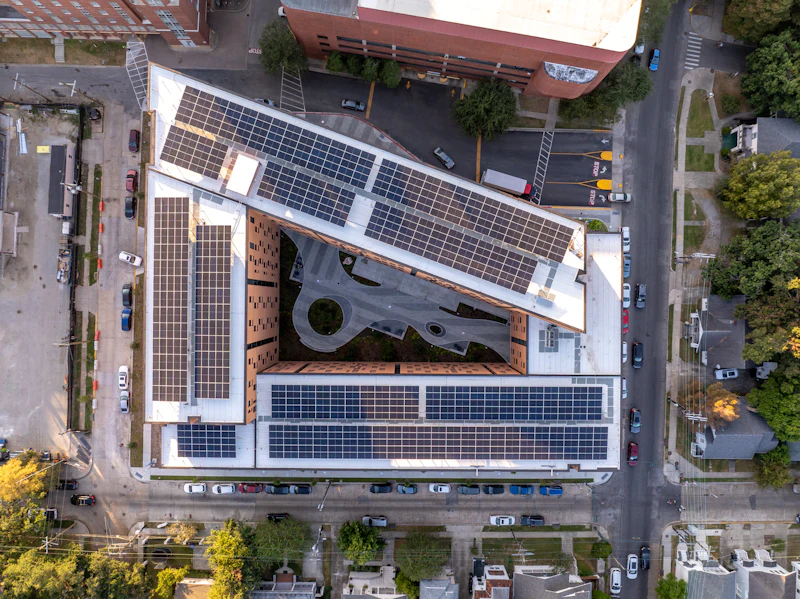
Aerial view of Uptown Hall with solar array

Shared living space with kitchen

Double suite style room
Flexible Living for Student Life
The residence hall introduces apartment-style units, now the most in-demand housing typology on campus, ranging from studio apartments to four- and six-person suites. Each unit includes kitchens, living rooms, and private bathrooms, offering students greater independence while remaining connected to campus life.

Shared spaces, including daylight-filled elevator lobbies, study rooms, and informal gathering areas, are distributed throughout the building to encourage interaction beyond individual apartments. At the corner of Freret and Calhoun, a vertical glass curtainwall highlights study spaces and creates a glowing beacon visible from the surrounding neighborhood.

Study lounges are located on each floor


Campus Connector
Architecturally, Uptown Residence Hall mediates between the residential scale of the surrounding neighborhood and the institutional character of Loyola’s historic campus. Interlocking L-shaped massing maximizes the building envelope permitted by zoning while framing the central courtyard and optimizing bed count on the constrained urban site.
A contemporary brick façade references the material character found throughout campus, while rhythmic window patterns subtly express the interior unit layouts.

Site plan
Stormwater gardens, solar panels, and energy-efficient systems support the building’s long-term environmental performance, while durable materials and an elevated first floor respond to the realities of New Orleans’ climate. Together, these strategies position the Uptown Hall as a resilient addition to campus and a vibrant home for the next generation of Loyola students.

Stormwater management plan

